Bianca Russell · 2 September 2026
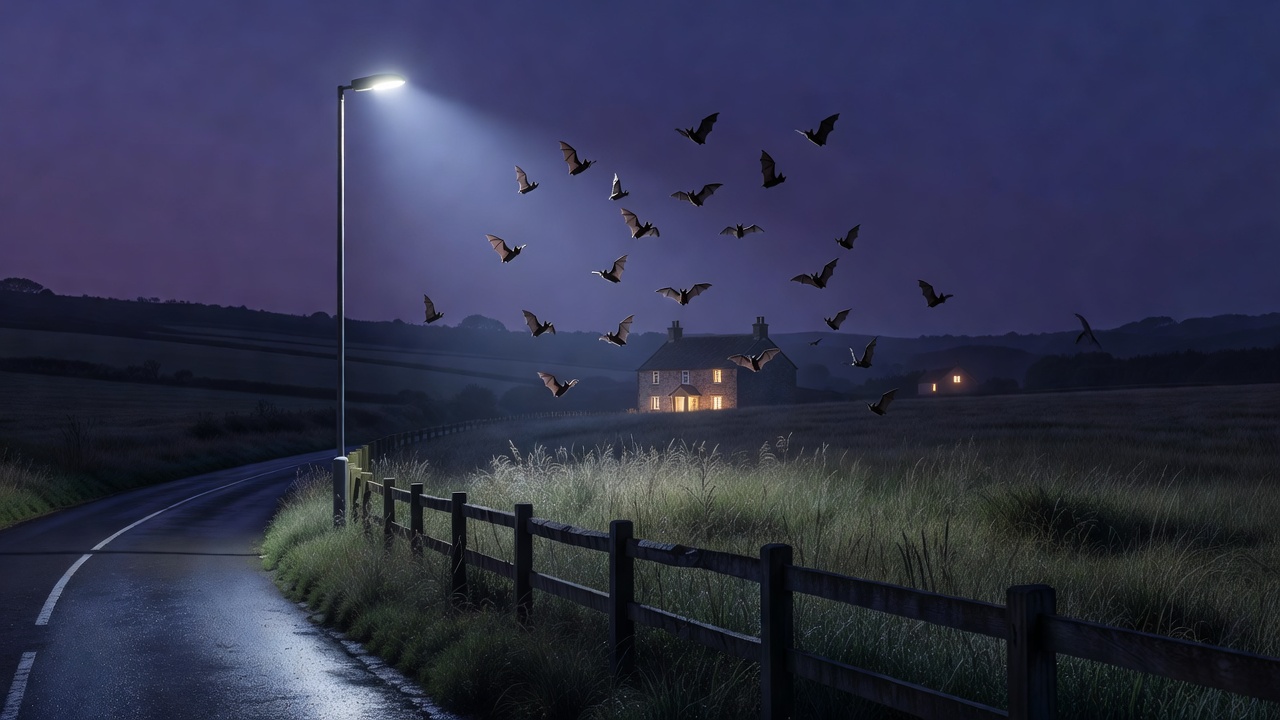
A recent study by ecologists has established clear links between artificial street lighting and altered bat migration routes across Europe. Researchers tracked thousands of bats using GPS devices and found that bright urban illumination causes significant deviations from traditional paths, increasing risks during seasonal movements.
Key Study Methodology and Data
The investigation involved 620 bats from five species fitted with lightweight trackers over three migration seasons. Data revealed average route shifts of 12 to 18 kilometers in areas with high LED street lighting density. Blue-spectrum lights disrupted echolocation and celestial navigation cues most severely, leading to delayed departures by up to 14 days. Historical comparisons with pre-LED eras confirmed a direct correlation with rising light pollution. Energy costs rose notably, with some bats showing 22 percent higher fat depletion upon arrival at wintering sites.
Regional variations highlighted urban corridors as hotspots for disruption, while rural dark-sky zones retained normal patterns. The team controlled for weather and habitat factors to isolate lighting effects, publishing results in a peer-reviewed journal on wildlife ecology.
Implications for Conservation and Lighting Design
Findings underscore threats to bat populations vital for insect control and pollination. Lumen Lab Light Research supports adaptive lighting strategies such as motion sensors, warmer color temperatures, and timed dimming during peak migration windows. These adjustments could reduce ecological impacts without compromising public safety. Policymakers are advised to integrate dark corridors into urban planning and expand monitoring networks. Continued studies will examine species-specific vulnerabilities and long-term population trends to guide evidence-based light management policies worldwide.